Some campaigns burn bright and vanish fast. Others stay with you. When I look at the work that’s shaped audience loyalty over time, it always came from one place. Purpose moved people first, then the marketing followed.
Most teams know the difference on paper. The struggle is proving it in a world that speaks in an entirely different set of metrics.
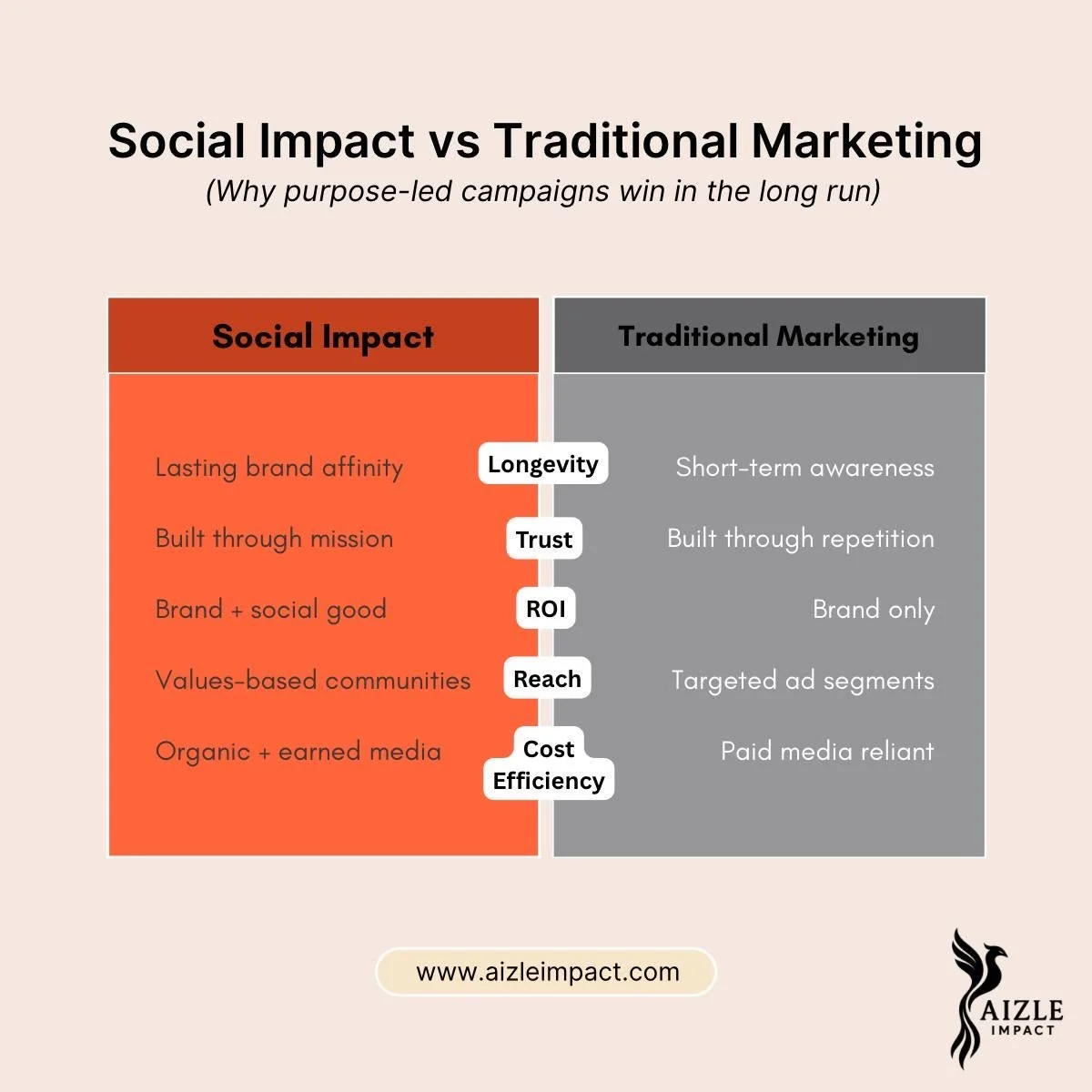
Short term attention is easy. Long term affinity is earned.
Traditional marketing can secure a burst of visibility. It might get clicks or a temporary lift. But it rarely builds the kind of relationship that brings your audience back years later.
Social impact does something different. When a brand shows up with intention, it gives people a reason to stay. It signals that the company stands for more than noise. I have seen gamers hit a wildlife fundraising goal within hours, and I have watched a blood donation campaign turn into one of the most engaged moments for a franchise. That kind of response comes from connection, not ad spend.
Mission builds trust. Repetition does not.
A brand can repeat a message until it is familiar. Familiarity is not trust. Trust forms when the work has meaning behind it. When people can see the outcome and not just the promise.
This is why cause-driven campaigns often beat traditional marketing on ROI. People push the work forward because the cause matters to them, and they go even further when they see the brand showing up with the same values. That creates earned reach and scale that paid media just can’t deliver.
Communities gather around values, not taglines.
Once people see their values reflected, the relationship shifts. They stop treating the brand like an advertiser and start treating it like a partner in something bigger.
This is how you move beyond targeted segments and build a real community. It is also how you keep that community. The loyalty is deeper because it is not transactional. It is shared.
Impact stretches every dollar. Traditional marketing spends it.
Paid media buys space. Social impact earns it. When a campaign aligns with something people care about, the amplification becomes organic. They talk about it. They share it. They help push it out into the world.
This is not about spending less. It is about spending smarter. Every brand wants reach and efficiency. Impact is one of the few levers that unlocks both.
Why this shift matters now
The landscape keeps changing, but attention has been fragile for years. People want proof. They want clarity. They want to see that brands understand the moment we’re in and living their values out loud.
Social impact gives you that clarity. It shows what a company stands for without having to argue for it.
Traditional marketing still has its place. It just can’t carry the full load anymore. Not when people choose brands the same way they choose communities.
Closing thought
The brands that last are the ones that stay rooted in mission and act like it. The work hits harder, the trust runs deeper, and the relationship grows with time. That is what separates a moment from a legacy.
If you want examples of how this comes to life, browse the work we create at Aizle Impact. The proof sits in the results and the communities that shaped them.